


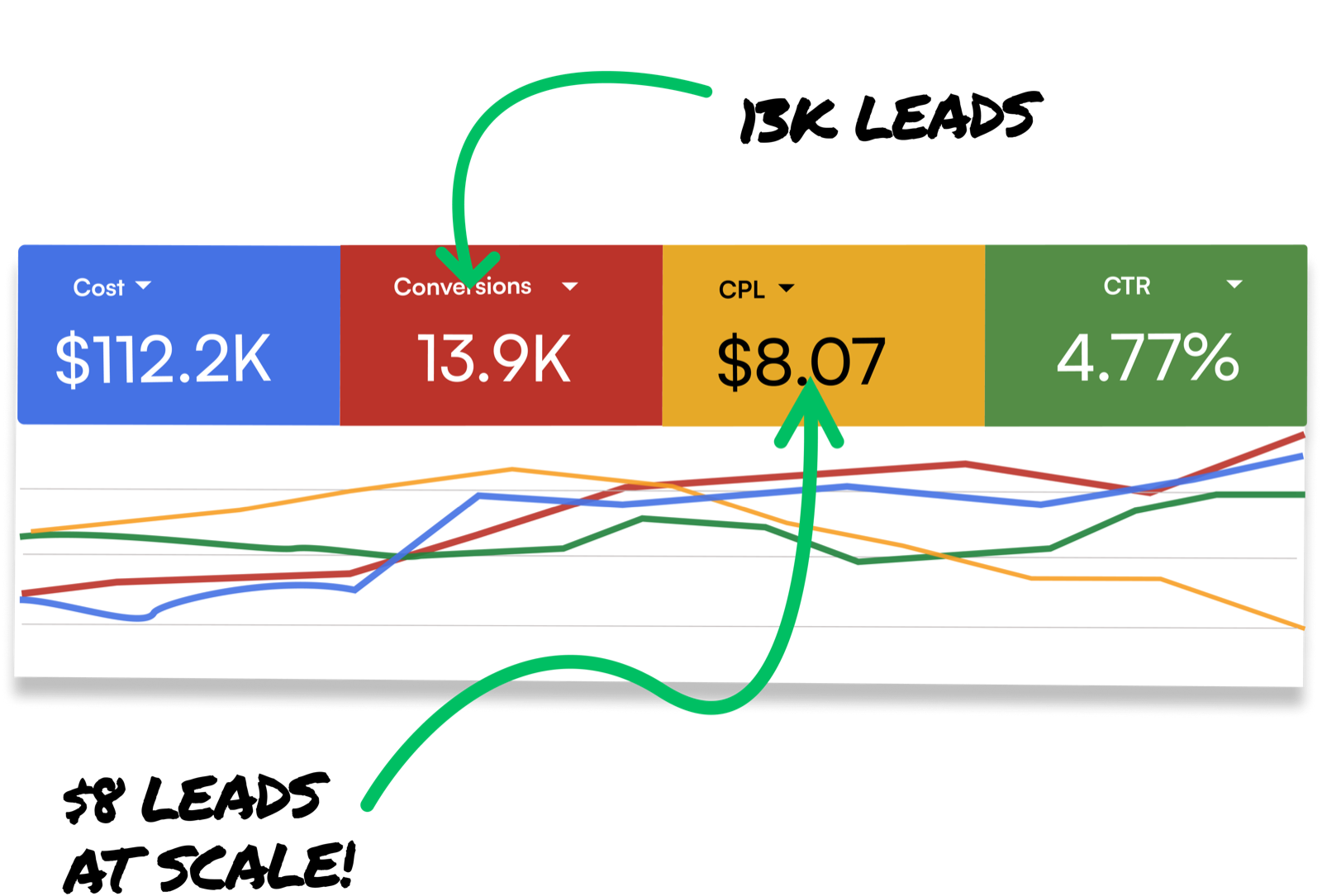
13.9K leads at $8.07 each.
- Ad spend
- $112.2K
- Leads
- 13.9K
- Cost per lead
- $8.07
- Click-through rate
- 4.77%
Most campaigns get dearer as they grow. This one averaged an $8 cost per lead across more than $100K of spend.
People searching for what you sell already want it, which makes Google the closest thing marketing has to a queue at your door. We put you at the front of that queue, cut the clicks that waste money and track every call back to the search that paid for it.

Google Ads should be your most predictable channel. Here’s why yours behaves more like a pokie machine.
“We’re paying for clicks that go nowhere.”
Loose keywords pull in students, job hunters and someone who wanted a completely different business with a similar name.
“Our competitors are always above us.”
They’re not always spending more. Often their ads and pages are just more relevant, and Google rewards that.
“Google says we got conversions, but the phone’s quiet.”
If page views and button clicks count as conversions, a struggling account can look remarkably healthy.
“Performance Max is a black box.”
Set it, forget it and hope. It’s an approach, just not one your accountant would recommend.
Search is the most expensive real estate in your market. Every irrelevant click is money handed to Google for nothing, and it happens every day the account runs.
Worse, Google learns from the conversions you feed it. Feed it rubbish and it goes looking for more rubbish, very efficiently. The account looks fine on paper while your cost per customer quietly climbs.
Not one extra dollar of budget. The money that was leaking to irrelevant searches simply went to people who were ready to buy.
| Measure | Today | Fixed |
|---|---|---|
| Monthly ad spend | $6,000 | $6,000 |
| Spent on irrelevant searches | $1,800 | $300 |
| Spent on real buyers | $4,200 | $5,700 |
| Enquiries (at $100 each) | 42 | 57 |
Illustrative numbers to show how the maths works. Not a client result or a promise of one.
Drop any one of them and the leads leak out the gap. Most businesses have a couple of these covered on a good week. We run all six, on one team, against one scoreboard.
Paying for clicks from people who were never going to buy.
Budget going to the searches that turn into jobs.
Competitors sitting above you every time.
Your ad first, landing on a page that answers exactly what they searched.
No idea which keywords actually work.
A clear list of the searches that make you money, with more budget behind them.
Every agency has a slide deck. Here are real dashboards from campaigns our team has run. (Screenshots, not stock photos of people pointing at laptops.)
Get numbers like theseMost campaigns get dearer as they grow. This one averaged an $8 cost per lead across more than $100K of spend.
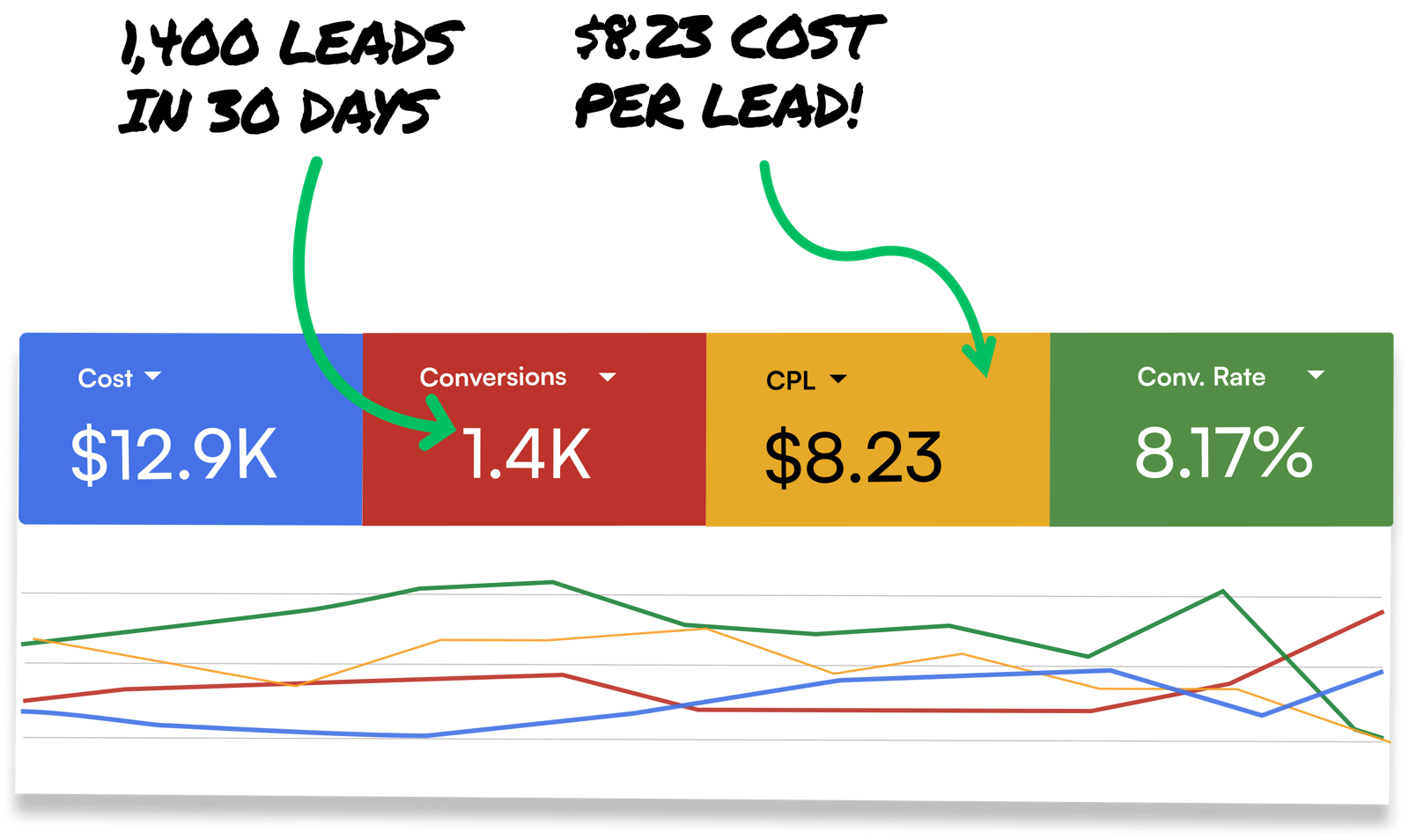
One of the most crowded ad markets in the country, and this campaign still brought leads in at $8.23 each.
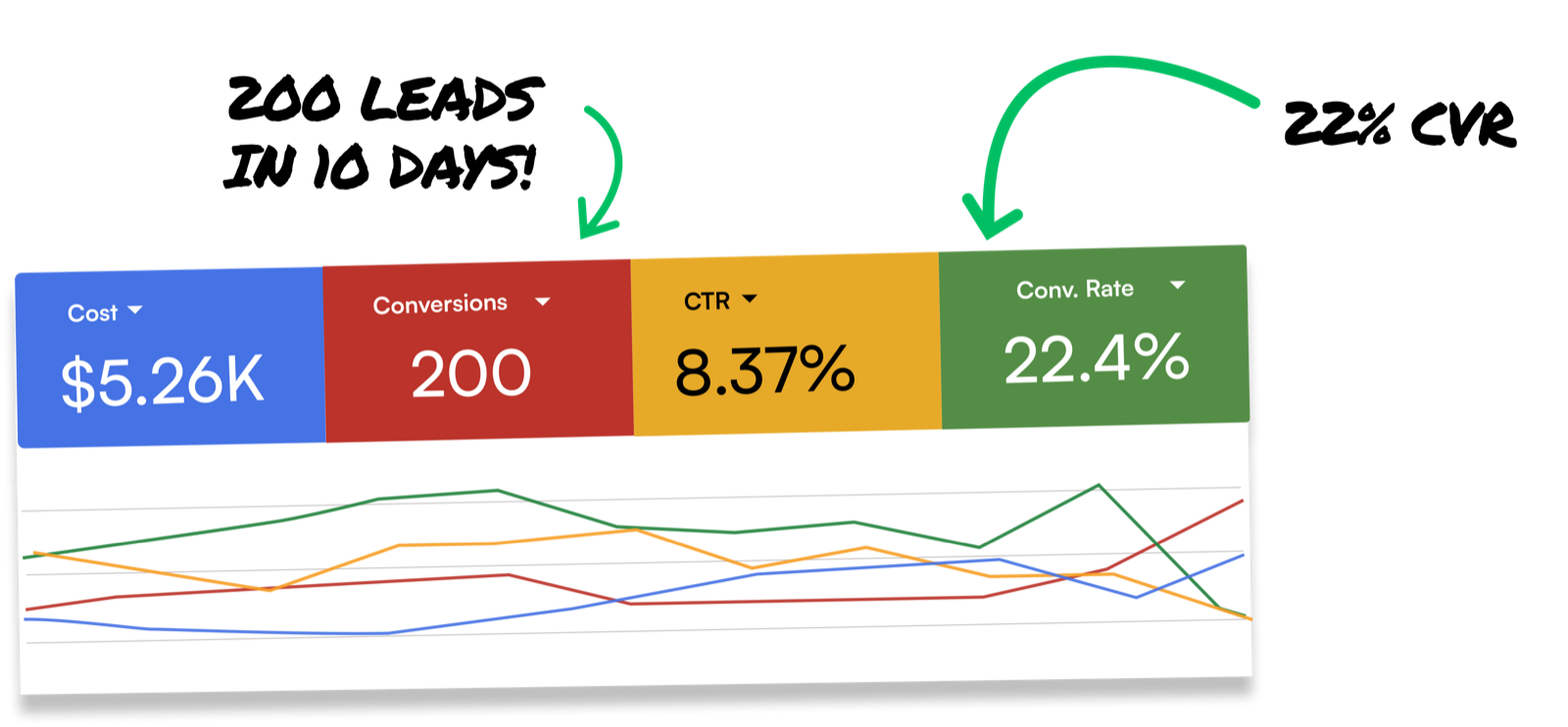
More than one in five people who clicked became a lead. That’s what happens when the ad, the offer and the page all agree with each other.
We build the account around buyer intent and real revenue, then our sales team makes sure the calls and enquiries it produces actually get closed.
We go through where your money has actually been going and cut the waste first.
So money stops leaking from day one.
Campaigns grouped by what people are trying to buy, with ads written for each group.
So every search gets the most relevant ad you’ve got.
Every ad sends people to a page that answers exactly what they searched for.
So more clicks turn into calls.
Calls, forms and sales fed back to Google, so it bids for customers instead of clicks.
So Google finds you more buyers and fewer browsers.
Got a question about Google Ads that isn't here? Bring it to the strategy call and you'll get a straight answer.
Usually search first, because it’s easier to control and learn from. Performance Max can come later, once the tracking is solid.
Yes. We often start by cutting the wasted spend in the account you already have before building anything new.
With call tracking on your ads and website, so every call is counted and tied back to the campaign that produced it.
No. We focus on paid search and the rest of the acquisition system. If SEO should be part of your plan, we’ll tell you.

Landing pages, VSLs and lead forms built to turn the traffic you’re already paying for into enquiries.

Instant follow-up, nurture and win-back sequences, so no lead goes cold waiting for someone to call.

Call scripts, objection handling, CRM setup and coaching for whoever takes your sales calls, so more enquiries turn into paying customers.
Running a business in Melbourne means competing in a fast-moving market, and anyone who has ever tried to scale with ads knows the struggle. Budget gets wasted, leads dry up, and even the best product can suddenly feel invisible. That's why having a complete customer acquisition system is essential — not only for staying ahead of competitors, but for turning ad spend into real, paying customers in a city that rewards speed and results.
Business owners often ask the same questions: How do I stop wasting money on ads? How do I know if my campaigns are actually working? What's the difference between sending traffic and sending qualified leads? And what's the best way to close the leads that come through?
This guide simplifies everything. It's built for real Melbourne business life — tight budgets, competitive markets, long hours, and the kind of pressure that happens when you're trying to scale fast.
A full-funnel system brings clarity to the chaos. Instead of trying to fix ads, sales, and follow-up all at once — which usually leads to wasted spend and half-finished campaigns — you build clear, predictable, efficient processes. It's the same method used by top-performing agencies: simple, systematic, results-driven routines that turn ad spend into customers.