

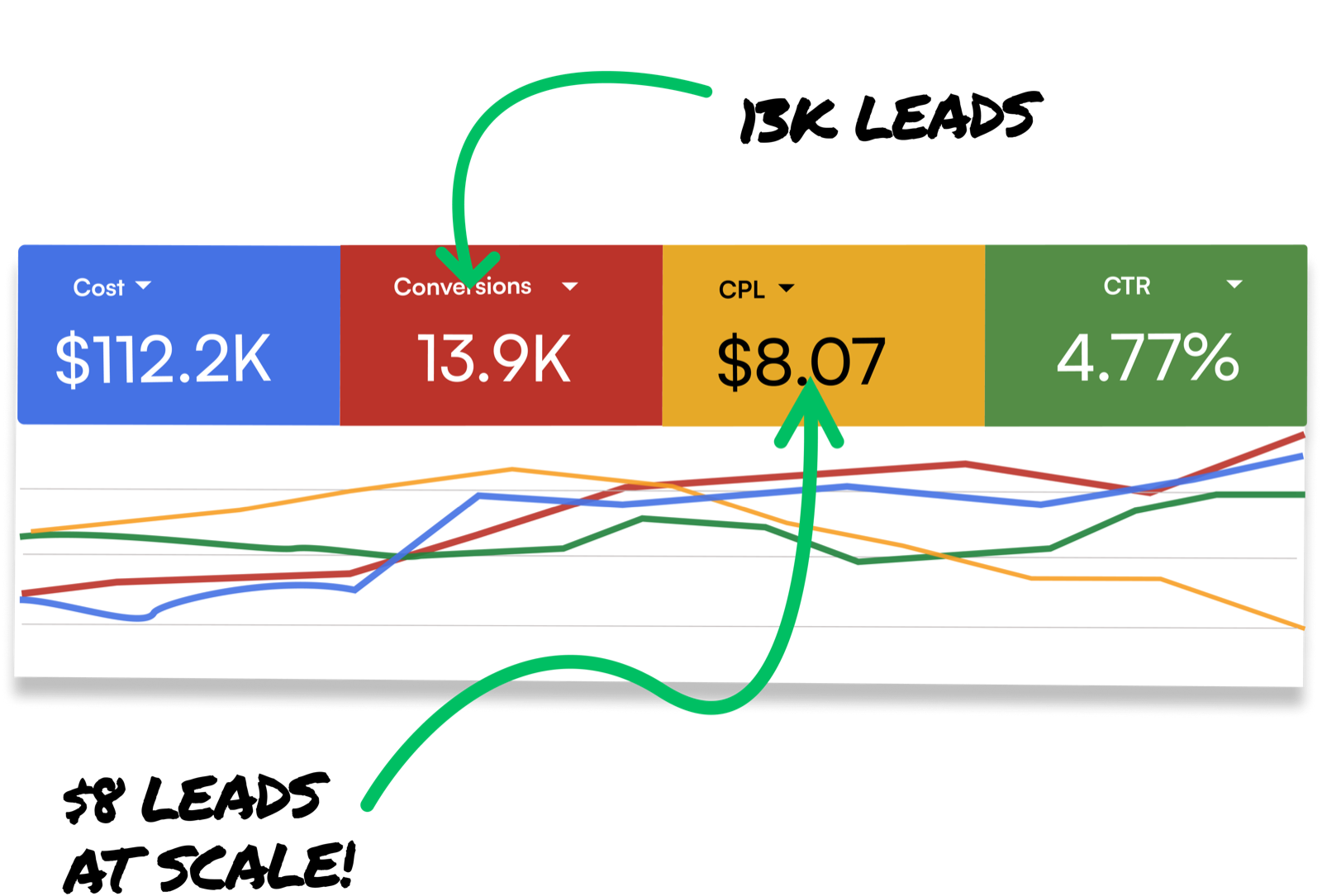
13.9K leads at $8.07 each.
- Ad spend
- $112.2K
- Leads
- 13.9K
- Cost per lead
- $8.07
- Click-through rate
- 4.77%
Most campaigns get dearer as they grow. This one averaged an $8 cost per lead across more than $100K of spend.
A post with 200 likes and no enquiries is a popularity contest you’re paying to enter. We build Meta campaigns around one number, what it costs you to win a paying customer, so you can see which ads make money and spend more on those with a straight face.

If any of these sound like your ad account, you’re paying Meta a lot more than you need to. (They say thanks, by the way.)
“We boosted a few posts and got likes, not leads.”
The post did great. Forty-two likes, mostly from your cousins. The phone stayed politely quiet.
“Our cost per lead keeps creeping up.”
The same ads have been shown to the same people for months. They stopped working, and Meta started charging you more for it.
“The leads we get are rubbish.”
Cheap form fills from people who don’t remember filling in a form, and certainly don’t remember your business.
“We can’t tell which ads actually made us money.”
Meta says one thing, your CRM says another, and nobody has the job of connecting the two.
Every week an ad runs past its use-by date, you pay more for the same result. Meta rewards ads people stop for and quietly charges extra for the ones they scroll past.
And when you can’t see which ads turn into customers, you end up cutting the winners and feeding the losers. That’s the difference between Meta being your best channel and a monthly bill you resent paying. Ask us how we know.
The cheap leads looked better in Ads Manager. The dearer ones made twice as many customers. That’s why we optimise for customers and never for cost per lead.
| Measure | Today | Fixed |
|---|---|---|
| Monthly ad spend | $4,000 | $4,000 |
| Leads (cost per lead) | 200 ($20) | 80 ($50) |
| Leads who pick up | 40 | 56 |
| New customers | 8 | 16 |
Illustrative numbers to show how the maths works. Not a client result or a promise of one.
Drop any one of them and the leads leak out the gap. Most businesses have a couple of these covered on a good week. We run all six, on one team, against one scoreboard.
Refreshing Ads Manager and hoping.
A weekly report showing which ads made you customers and what each one cost.
Calling leads who don’t remember who you are.
Leads who know your business and are expecting your call.
Too nervous to touch the budget in case it all falls over.
Increasing spend because the numbers say it’s safe.
Every agency has a slide deck. Here are real dashboards from campaigns our team has run. (Screenshots, not stock photos of people pointing at laptops.)
Get numbers like theseMost campaigns get dearer as they grow. This one averaged an $8 cost per lead across more than $100K of spend.
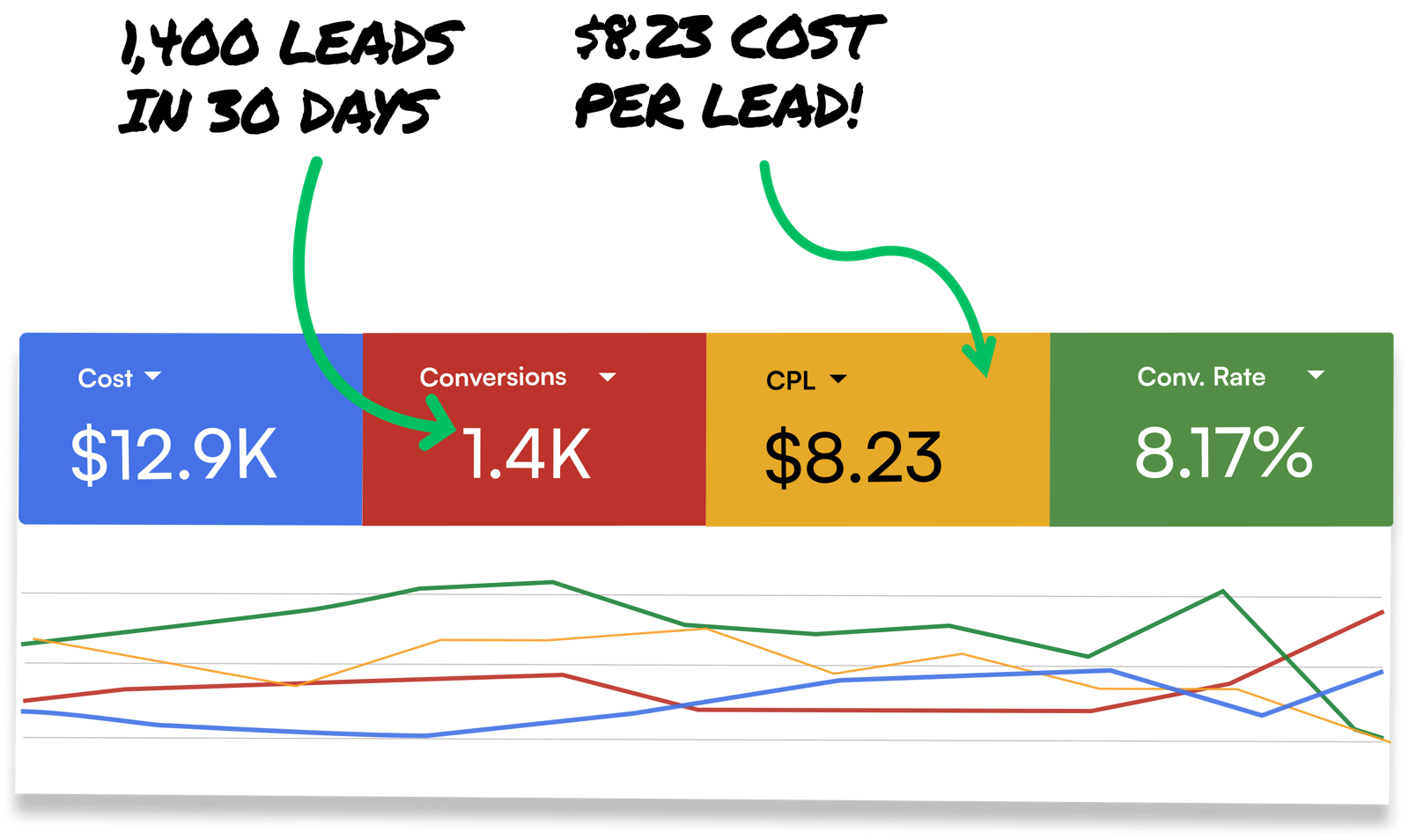
One of the most crowded ad markets in the country, and this campaign still brought leads in at $8.23 each.
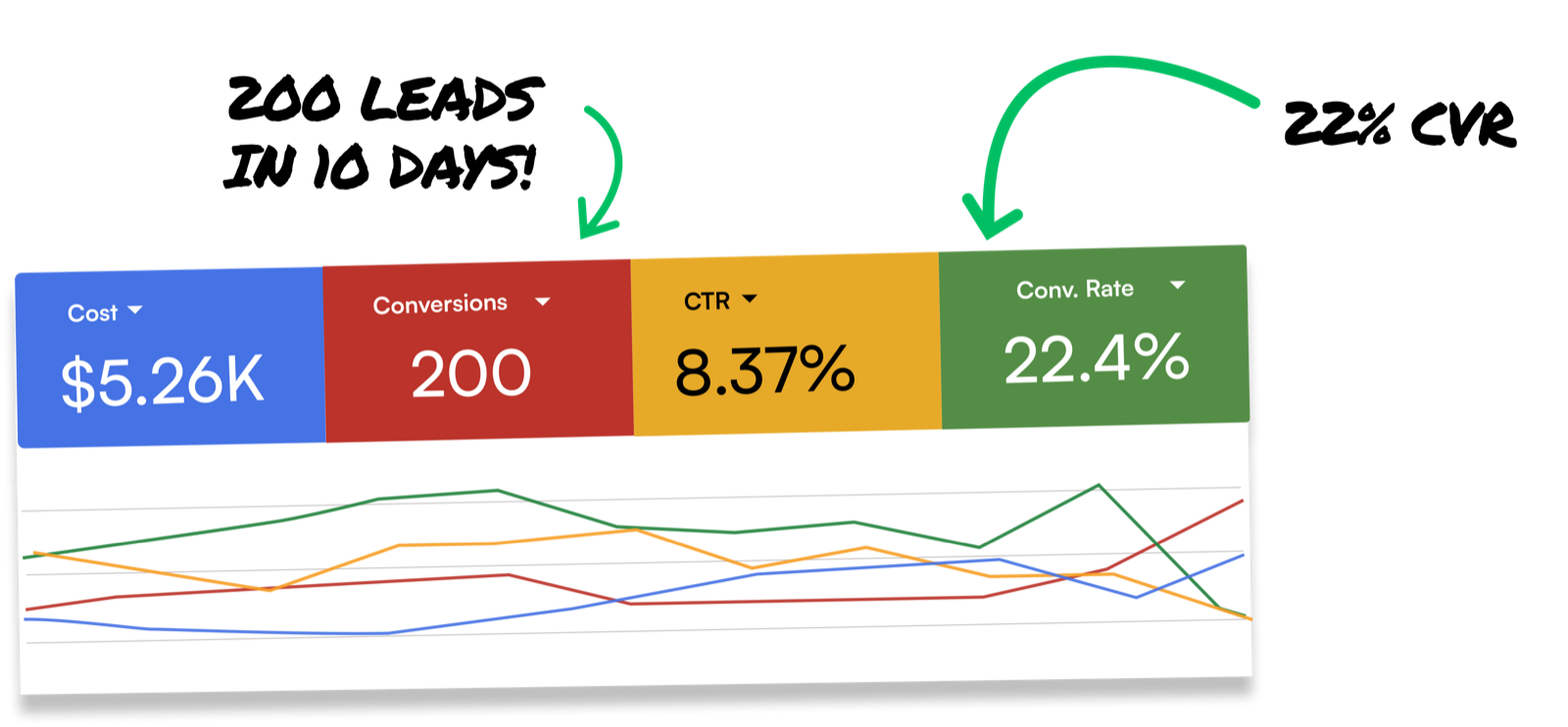
More than one in five people who clicked became a lead. That’s what happens when the ad, the offer and the page all agree with each other.
Our marketing team builds and runs the campaigns. Our sales team makes sure the leads they bring in get followed up and closed, because a lead nobody calls is just an expensive email address.
We check your pixel, Conversions API and CRM so every lead can be traced back to the ad that produced it.
So every dollar can be followed through to a sale.
Direct-response copy and creative built around your offer, with several angles ready to test from day one.
So the right people stop scrolling and the wrong ones keep going.
Campaigns usually go live within two weeks. We test new hooks every week and cut what doesn’t pay.
So winners get found fast and losers get cut faster.
Budget only goes up when the cost per customer holds, not when the cost per lead looks pretty.
So growth doesn’t quietly eat your margins.
Got a question about Meta Ads that isn't here? Bring it to the strategy call and you'll get a straight answer.
It depends on your market and what a customer is worth to you. We’ll work out a sensible starting budget on the strategy call, rather than picking a number that sounds impressive.
We write the copy and the creative briefs and build the ads with you. If you have photos or video of your business, even better, because real beats stock every time.
Data starts coming in straight away. The first month is mostly about learning what works, and the real gains come as we back the winners.
You do. We work inside your account, so the data and the history stay with your business.

Search and Performance Max campaigns that catch buyers while they’re actively looking, tracked all the way through to revenue.

Landing pages, VSLs and lead forms built to turn the traffic you’re already paying for into enquiries.

Instant follow-up, nurture and win-back sequences, so no lead goes cold waiting for someone to call.
Building a scalable business means turning ad spend into real customers. But most businesses throw money at Meta and Google, cross their fingers, and hope something sticks. The result? Wasted budgets, low-quality leads, and sales teams chasing tire-kickers all day.
That's where a proper customer acquisition system changes everything. Response Boss doesn't just run ads—we architect the entire machine: tight targeting, killer ad copy, flawless funnel tracking, and sales support to close every lead that matters.
We've worked with dozens of Melbourne businesses frustrated with their ad agency. They were spending thousands, getting hundreds of clicks, but closing almost nothing. The fix wasn't always bigger budgets. It was system design. Better targeting. Smarter bidding. Real sales strategy.
This guide breaks down how to build an acquisition system that actually works. It covers everything from audience selection and campaign structure to conversion tracking and sales handoff. It's built for businesses ready to scale—not vanity metrics, just real revenue.
A proper system brings clarity to chaos. Instead of guessing which ads work, which leads matter, or why your close rate stinks, you get real data, real insight, and real control. It's the same method Response Boss uses for clients: simple, predictable, ruthless focus on what converts.